Three oceans collide beneath your feet. A glass bridge floats above living seas. And every morning, the sun rises from the water — only here.
Have any queries? Please contact us
✉ enquiry@gokanyakumari.comThis is the only place on the Indian subcontinent where the Arabian Sea, the Bay of Bengal, and the Indian Ocean meet. At the southernmost tip of mainland India, waves from three seas converge along a single shoreline — a rare meeting of waters found almost nowhere else on Earth.
Known in ancient Tamil literature as Nanjil Nadu, this region was once part of the Ay Kingdom of the Sangam age, later becoming the heartland of the Venad Kingdom and the powerful Travancore Kingdom. The magnificent Padmanabhapuram Palace, one of Asia's largest wooden palaces, still stands as a reminder of that royal legacy.
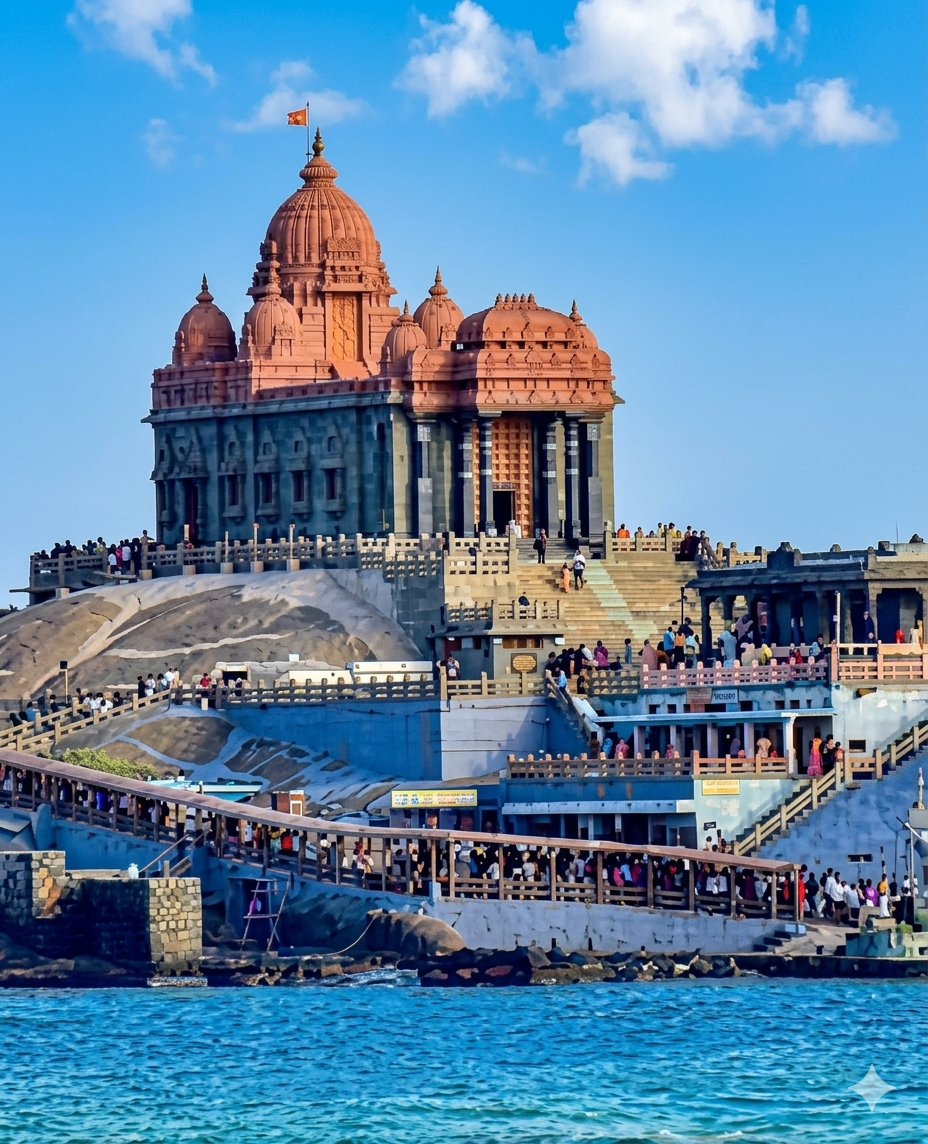
In 1892, Swami Vivekananda meditated on a rock just offshore, an experience that shaped his vision before he carried India's philosophy to the world.
Within a single hour, the land transforms from mountains and forests to fertile farmlands and the open ocean, reflecting the ancient Tamil landscapes of Kurinji (mountains), Mullai (forests), Marutham (farmlands), and Neithal (coastal lands).
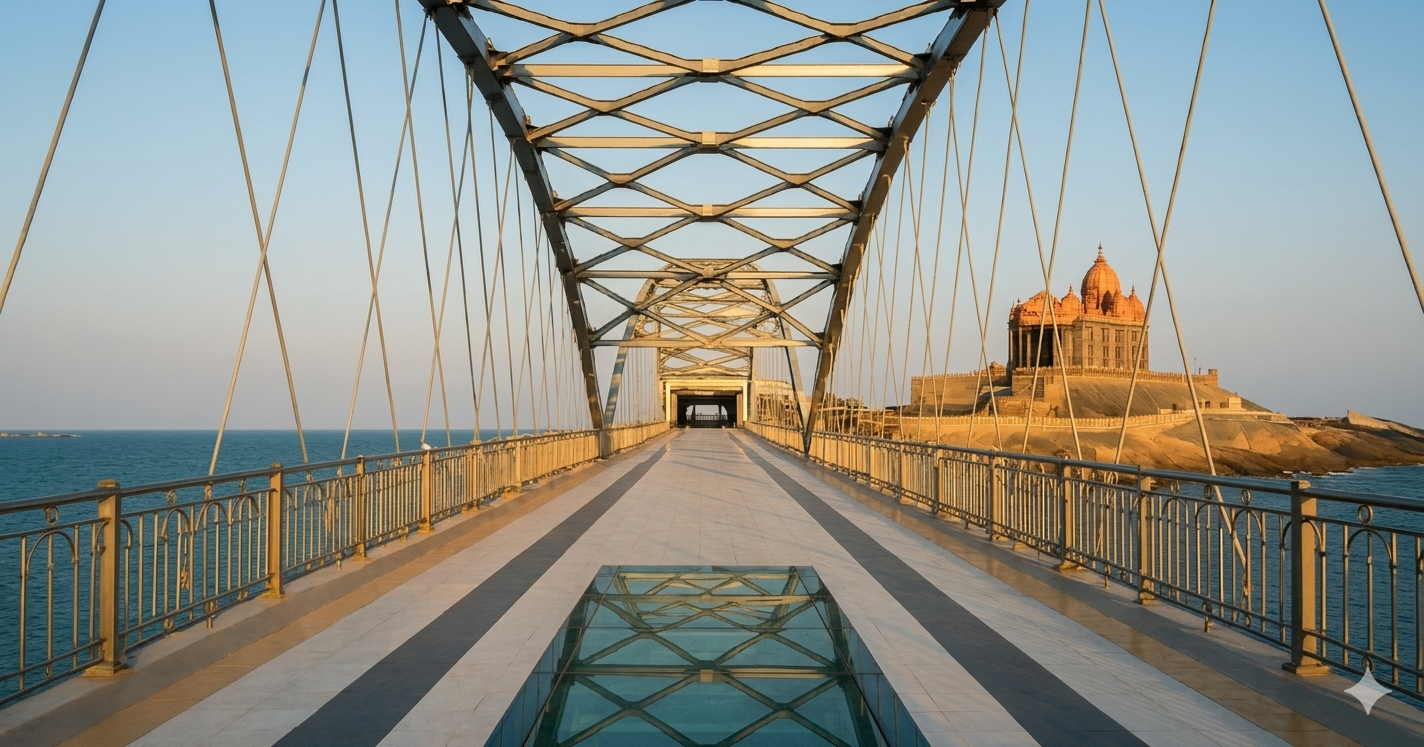
77 metres of marine-grade steel and tempered glass stretching across open ocean — connecting two of India's most sacred monuments. Walk above three living seas as waves crash beneath your feet. Nothing else like it exists in the country.
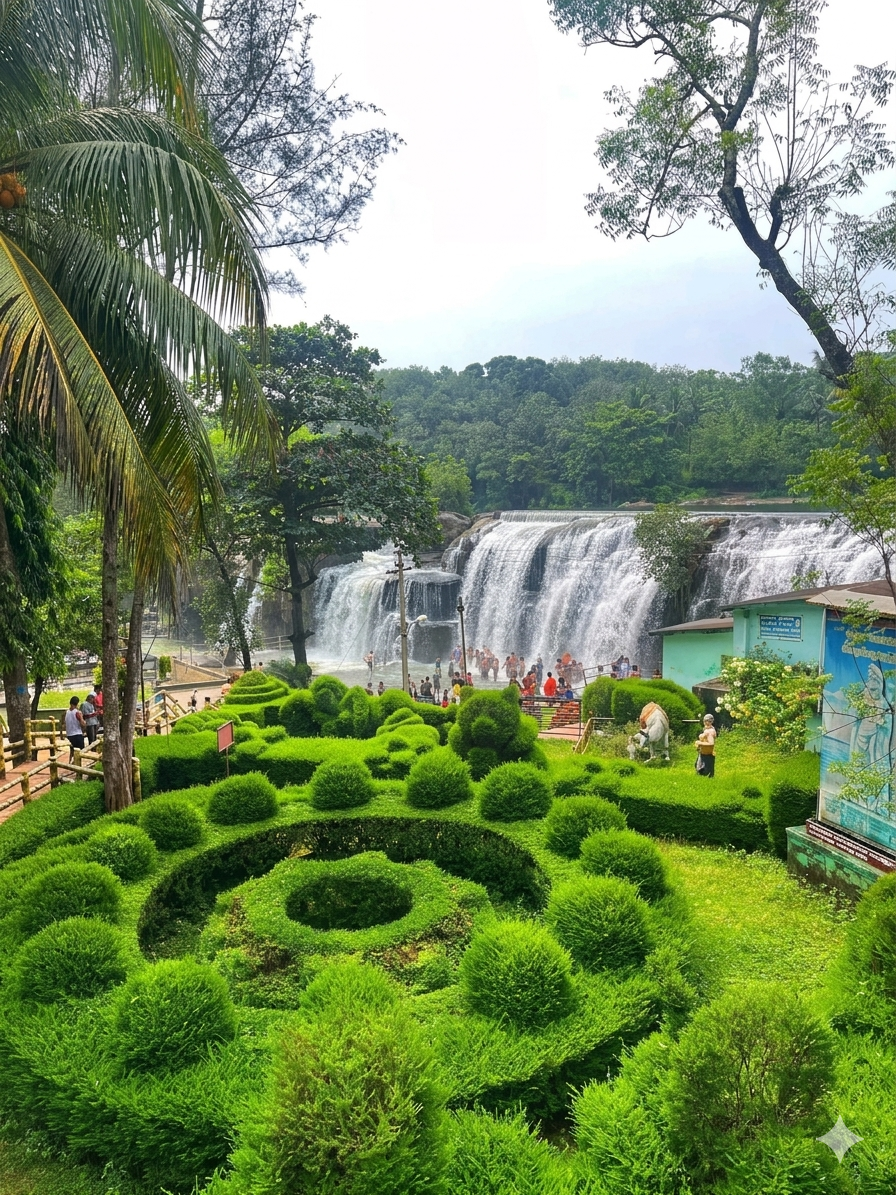
Tamil literature describes the world through five landscapes of life — Thinai. Kanyakumari is one of the rarest regions on Earth where four of these five landscapes exist together in a single district, except the desert. Mountains, forests, fertile farmlands and coastal shores — all within a short distance of each other.


Temples older than most nations. A glass bridge over open ocean. A palace built entirely of wood. Kanyakumari earns every hour you give it.
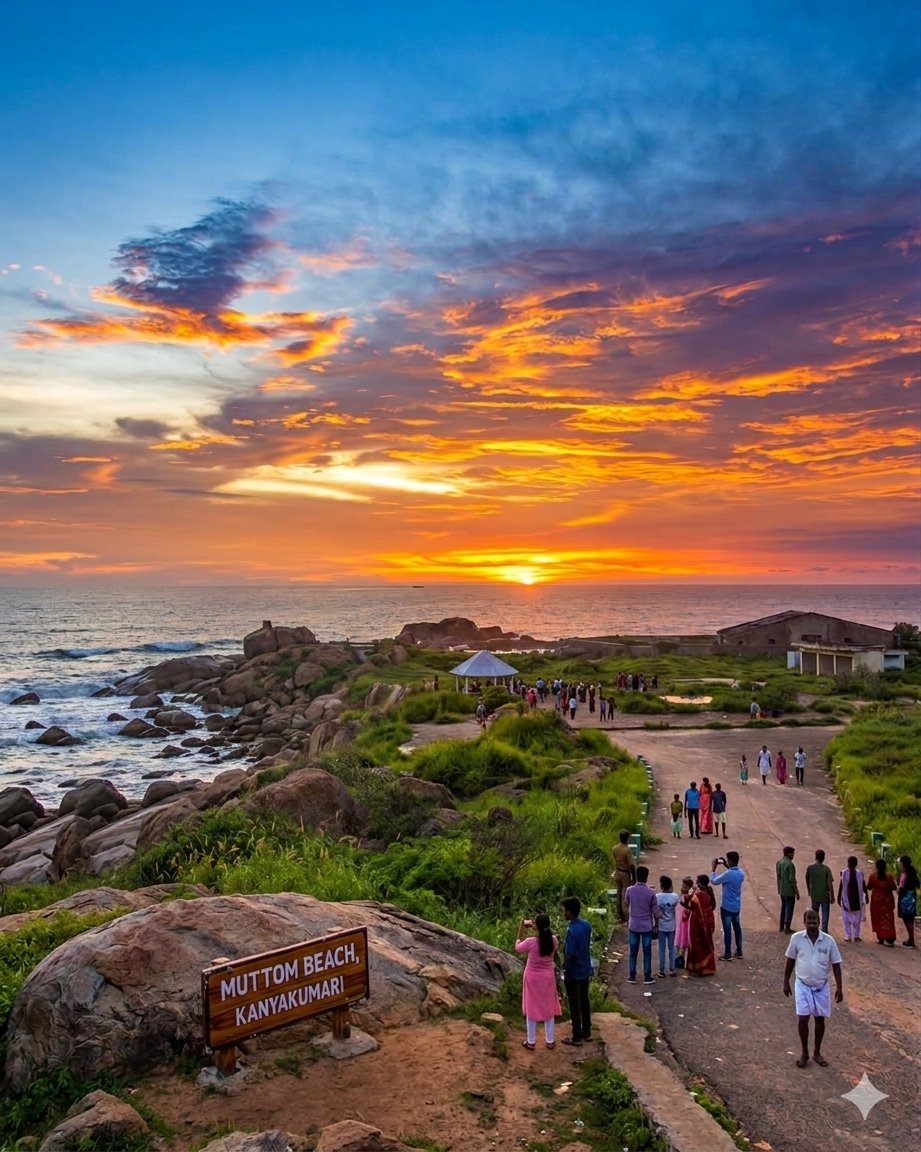
The Triveni Sangam at Kanyakumari is the only point on the Indian subcontinent where the Arabian Sea, Bay of Bengal, and Indian Ocean converge simultaneously. Three sets of waves arrive from three directions — and where they meet, the sand is painted in three distinct mineral hues by three distinct currents.
Stand at the water's edge and you can feel all three seas pulling at your feet in different rhythms. This sensation exists nowhere else on Earth.
Triveni Sangam · Kanyakumari ShoreOpened on 30 December 2024, this engineering marvel stretches 77 metres across open ocean on transparent glass panels — connecting two of India's most revered monuments. Nothing else like it exists anywhere in the country.
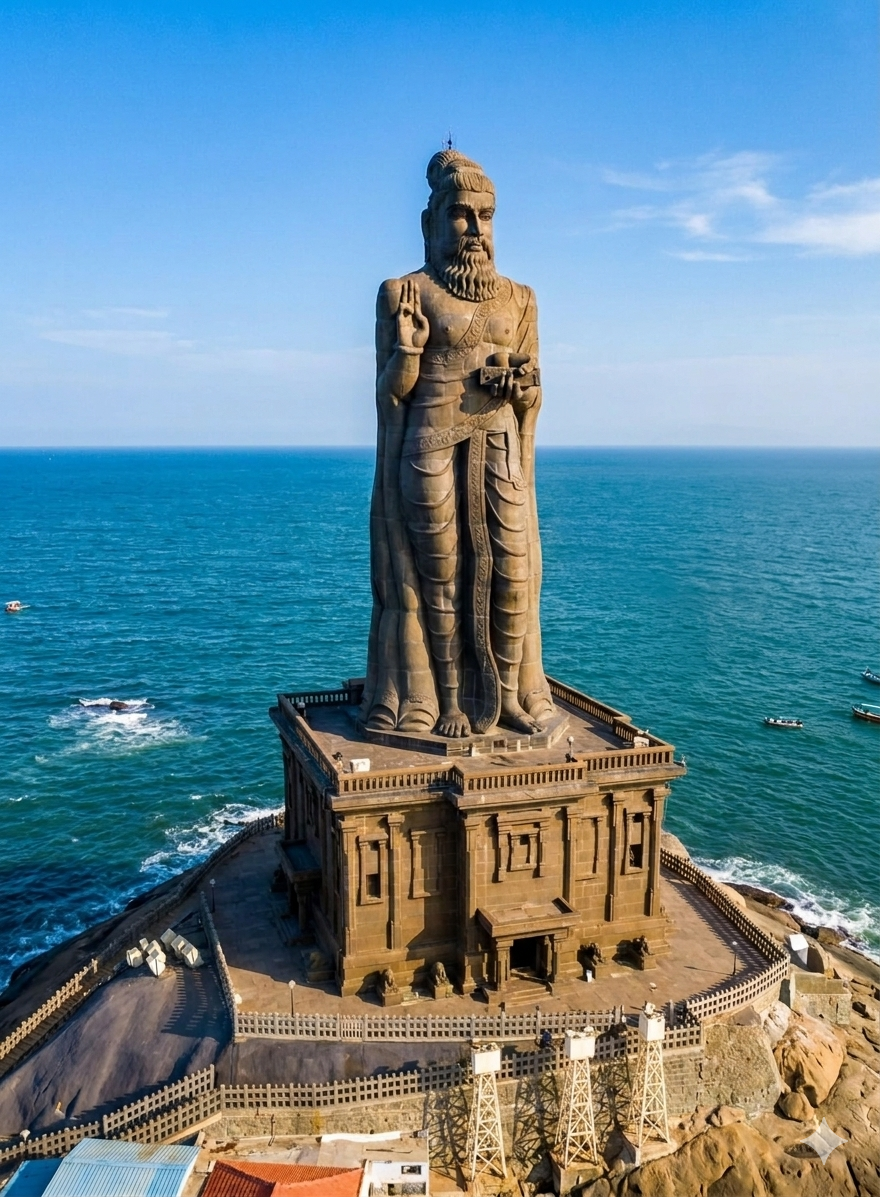
Connects the Vivekananda Rock Memorial to the Thiruvalluvar Statue — walk the glass panels as three oceans move beneath your feet.
A land of paddy fields that became the seat of a great kingdom. The echoes of that era still live in every carved wooden beam, every temple spire, and every royal inscription across the district.
Before tourist maps existed, this fertile land was named for its paddy fields. Ancient irrigation canals fed kingdoms that shaped the entire southern coastline across two thousand years of continuous history.
The Venad Kingdom transformed into the legendary Travancore. Its earliest capitals — Thiruvithamcode and Padmanabhapuram — are right here, preserving four unbroken centuries of royal memory in wood and stone.
Considered one of Asia's finest wooden palaces. Every column, courtyard, and carved ceiling tells of master craftsmen serving Travancore royalty across four centuries of patronage and artistic genius.
In 1892 a young monk made his way to a rock at land's end, meditated for three days, and emerged with the vision that would electrify the World Parliament of Religions in Chicago and awaken the world to India's philosophy.
Ocean, heritage, or wilderness — pick your trail, or walk all three.
Three oceans pulling at your feet. A sunrise that belongs to the sea. A glass bridge between two sacred rocks. This isn't a holiday — it's a pilgrimage to where the land surrenders.