At a glance
- Location
- Vembannur wetland, near Nagercoil
- Recommended time
- 45–90 minutes of quiet observation
- Best for
- Birdwatchers, nature lovers and visitors interested in water and farming.
- Best time
- Choose an early daylight visit in calm weather. Bird presence varies with season, water level and disturbance; no sighting is guaranteed.
- Entry
- Confirm permitted observation points and any Forest Department or local restrictions. Ramsar designation does not itself create public access. Visitor information should be confirmed before travelling.
- Walking
- Stay on stable public paths; wet banks, bunds and adjoining agricultural plots may be uneven, slippery or private.
Before you go: Keep well back from birds and nests.
Visit durations are editorial planning suggestions. Allow extra time for travel, queues and your group’s pace.
Why visit Vembannur Wetland?
- A human-made tank within the cultivated landscape
- The relationship between managed water and bird habitat
- Water levels, margins and vegetation as things to observe
How to reach
By bus
Confirm the Vembannur village stop and an authorised public observation point before using local transport. No current official route number was verified. Confirm the destination and return service at the bus stand.
By train
Nagercoil Junction (NCJ) is a regional railway gateway; arrange a separate road transfer. Check your train's stopping station and travel-date timetable.
By road
The Ramsar record locates Vembannur about 8 km west of Nagercoil and about 4 km from Rajakkamangalam, within Melasankarankuzhi Panchayat. These locate the wetland; they do not establish a public visitor entrance or permission to cross fields.
Transport sources checked: . Ramsar Sites Information Service: India annotated list, Vembannur; Ramsar Sites Information Service: Vembannur Wetland Complex.
Wetland locality established; local bus stop, numbered service, visitor entrance, permissions and facilities not verified. Ramsar listing is not an admission or transport promise.
Visitor information
- Access and facilities
- The official wetland profile does not establish opening hours, a ticket counter, hides or toilets. Visitor information should be confirmed before travelling.
- Observation
- Check recent local conditions and use permitted viewpoints. Respect agricultural work and avoid disturbing resting or nesting birds.
Best time to visit
Choose an early daylight visit in calm weather. Bird presence varies with season, water level and disturbance; no sighting is guaranteed.
Vembannur is distinct from the Suchindram–Theroor wetland complex. Confirm the public approach and observe quietly from permitted ground. A wetland designation does not promise a visitor centre, hide, boating service or sightings of a named species.
Visitor information should be confirmed before travelling. Fees, permissions, facilities and last entry are not established unless explicitly sourced below.
Facilities, parking and accessibility
Confirm toilets, drinking water, parking, step-free access and assistance with the destination. A railway or bus arrival does not establish access to the entrance; plan any final walk or transfer for your group.
Earlier visitor notes
Background notes: current arrangements require confirmation. Use the dated official source record for the scope of verified details.
Plan a considerate wetland stop
Confirm the public approach locally before making a special journey. A wetland designation does not establish an entrance gate, marked walking circuit or boating service. Keep the outing suited to the weather and the people travelling with you.
Pair the subject with Manakudy Estuary if you want to compare an inland tank with a river mouth, allowing for the separate journey and current access. The contrast helps show how freshwater storage and a tidal coastal setting support different landscapes.
What to see and do
- Confirm the public approach without entering farmland
- Observe quietly with binoculars from permitted ground
- Compare the inland tank with Manakudy on a separate, adequately timed journey
Important things to know before visiting
Keep well back from birds and nests. Do not use playback, feed wildlife, enter the water or cross crops to get a closer view.
Best way to experience this place
For birdwatchers, use binoculars from one permitted point and allow the birds to settle instead of repeatedly moving along the bank.
History and story behind the place
Choose a quiet public viewpoint
Use a permitted public viewpoint and observe from a distance. Binoculars are more useful than approaching a flock for a closer photograph. Stay clear of bund maintenance, field access and any area closed to visitors.
The birds seen on a particular visit depend on the season, water and conditions. A recognised bird habitat is not a promise of a named species or a visitor hide. Give yourself time to watch the different parts of the waterbody rather than moving repeatedly along its edge.
Geography, water and local life
A wetland shaped by water management
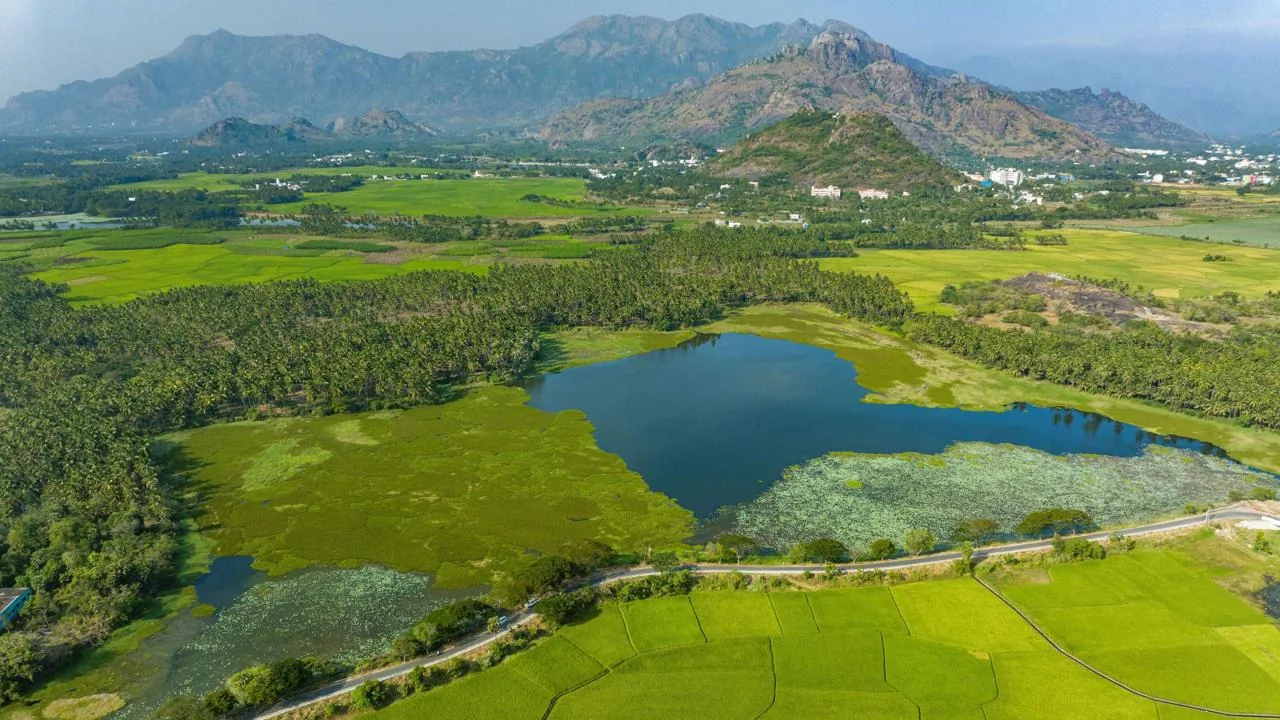
The Ramsar information sheet describes Vembannur as a human-made inland tank near the village of the same name in Rajakkamangalam Block. It belongs to a cultivated and settled landscape, where storing water and supporting habitat are connected parts of the same place.
The designation is separate from the Suchindram–Theroor Wetland Complex. The district wetland story compares the two sites and explains why their names and designated areas should not be combined into one wetland total.
A tank can serve fields and wildlife
The Ramsar account links the tank and the Therrakal canal with water from the Pazhayar for irrigation. That connection helps explain how a managed waterbody can also become important to waterbirds. Water levels, shallow margins and vegetation create different feeding and resting opportunities.
Read the scene as a working landscape. Fields, houses and water-management structures have their own purposes alongside bird habitat. The Pazhayar story follows the wider river and the farming feature explains cultivation beyond the tank edge.
What makes this place unique?
The wetland shows how a working irrigation tank can also form internationally recognised habitat, connecting agriculture and conservation.
Combine this with nearby places
Combine with Nagercoil on a short nature-and-town outing. Manakudy adds an estuary comparison but requires a separate coastal road leg.
Responsible visiting
Keep distance from birds, avoid playback or feeding, and leave bund and farm access clear.
Quick summary
Vembannur suits quiet birdwatching and landscape observation. Allow 45–90 minutes as an editorial suggestion, with a confirmed access point and modest expectations.
Sources and further reading
Sources for visitor information and transport
- Tamil Nadu State Wetlands Authority: Vembannur Wetland Complex — Human-made irrigation tank, bird habitat, location and Ramsar designation; not a public visitor facility or guaranteed sightings.
- Ramsar Sites Information Service: India annotated list, Vembannur — Official Ramsar designation/locality description: west of Nagercoil, near Rajakkamangalam, Melasankarankuzhi Panchayat.
- Ramsar Sites Information Service: Vembannur Wetland Complex — Separately identifies Vembannur as Ramsar site 2474; no bus routes or visitor entrance supplied.
- Southern Railway: Thiruvananthapuram division station list — Station identities/codes NCJ, ERL and KZT only; not a current train timetable, last-mile distance survey or proof of nearest station.
Verification note
Editorial review: . Transport guidance follows the dated source record above; this is not a live timetable confirmation. Current opening hours, fees and permissions have not been independently verified.
Historical references support the research passages they accompany. Editorial visit durations and recommendations are suggestions, not official operating information.