
At a glance
- Location
- Parthivapuram
- Recommended time
- 45–90 minutes during confirmed public access
- Best for
- Temple architecture, heritage enthusiasts and pilgrims.
- Best time
- Choose daylight within a confirmed worship or visitor session, leaving time to see the building as a whole.
- Entry
- Confirm worship access and monument arrangements; the protection listing does not establish daily visitor admission. Visitor information should be confirmed before travelling.
- Walking
- Ask about the current entrance, thresholds and steps; no audited accessible route has been established.
Before you go: Follow footwear, dress and photography rules.
Visit durations are editorial planning suggestions. Allow extra time for travel, queues and your group’s pace.
Why visit Parthivapuram Temple?
- A Vishnu temple with a Kerala architectural setting
- The relationship between roof, shrine and enclosure
- An opportunity for slow architectural observation alongside living worship
How to reach
By bus
Use the full Parthivapuram Parthasarathi temple name when asking for the local service and final transfer. No current official route number was verified. Confirm the destination and return service at the bus stand.
By train
Nagercoil Junction (NCJ) is a regional railway gateway; arrange a separate road transfer. Check your train's stopping station and travel-date timetable.
By road
ASI identifies the Parthasarathi and Krishna temple complex at Parthivapuram in Kanyakumari district. Confirm the exact public entrance and onward road transfer; do not substitute the temple at Thiruvattar.
Transport sources checked: . Archaeological Survey of India: Centrally Protected Monuments list.
Temple identity and locality verified. Current bus stop, route number, approach town, station proximity, public entry and return connection not established.
Visitor information
- Opening and entry
- Visitor information should be confirmed before travelling.
- Heritage and worship
- Ask which spaces are open to visitors and whether any conservation work affects access. Worship arrangements and protected-monument rules are separate checks.
Best time to visit
Choose daylight within a confirmed worship or visitor session, leaving time to see the building as a whole.
Confirm public entry and worship sessions before travelling. Observe the roof, shrine and enclosure from admitted areas. Follow current footwear and photography instructions, and allow worshippers space.
Visitor information should be confirmed before travelling. Fees, permissions, facilities and last entry are not established unless explicitly sourced below.
Facilities, parking and accessibility
Confirm toilets, drinking water, parking, step-free access and assistance with the destination. A railway or bus arrival does not establish access to the entrance; plan any final walk or transfer for your group.
Earlier visitor notes
Background notes: current arrangements require confirmation. Use the dated official source record for the scope of verified details.
Make room for worship and observation
Confirm current public access and worship arrangements before travelling. Follow instructions about footwear, photography and the permitted route. Neither a heritage listing nor an online map guarantees that every part of a temple is open to visitors.
Keep the day’s route focused. One architectural visit with time to observe can be more useful than several brief stops across the district. The itinerary guide offers inland route ideas; adapt them to your interests, travel time and the current opening arrangements.
What to see and do
- Confirm identity, admission and the return transfer
- Observe the admitted shrine and architectural setting
- Allow time for worship without crowding or photographing rituals uninvited
Important things to know before visiting
Follow footwear, dress and photography rules. Do not touch or rub inscriptions and carved surfaces, and respect conservation barriers.
Best way to experience this place
For architecture enthusiasts, begin with the roof, entrance and arrangement of spaces before looking for individual carved details.
History and story behind the place
Parthasarathi and the Vishnu shrine
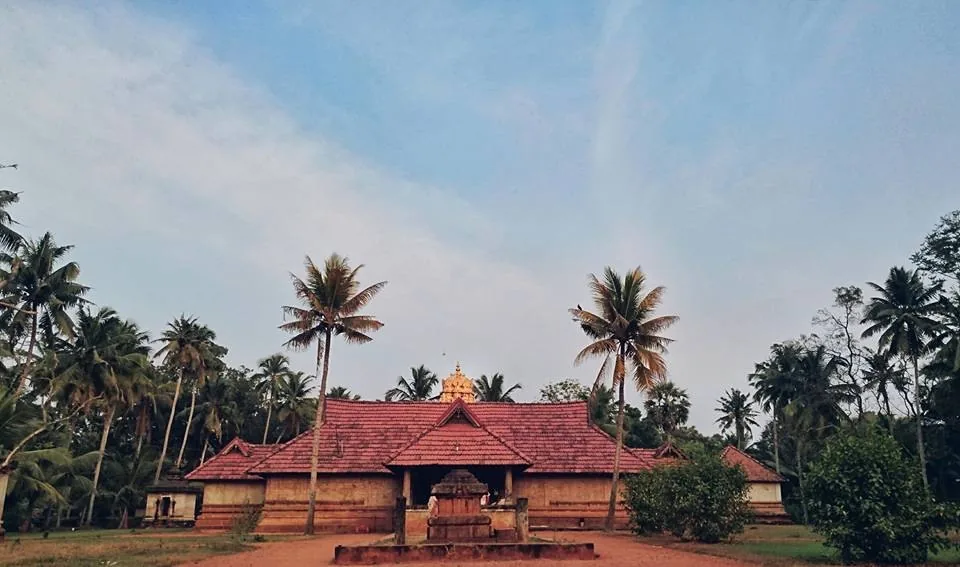
The Archaeological Survey of India’s monument account identifies the principal shrine at Parthivapuram as a Vishnu temple, popularly known as Parthasarathi. Its record places the monument within the early phase of Kerala temple architecture. Parthasarathy and Parthasarathi are spellings encountered in English references.
Use the full village and temple name when seeking directions. This is a different destination from the better-known Parthasarathi Temple in Chennai. A familiar deity name alone is not enough to identify a shrine across Tamil Nadu.
Look at the building as a whole
Begin with the relationship between the shrine, its surrounding space and the public approach. From permitted areas, notice how the roof, walls and entrances work together. Understanding a building’s arrangement gives more context to individual carved details.
Compare the experience with Thiruvattar or Thirunandikkara on a separate, considered heritage journey. Shared regional building traditions do not give neighbouring temples identical histories or make every part of a complex the same age.
A monument with a documentary record
The ASI account records the site under its Thrissur Circle. It supplies an institutional starting point for understanding the monument’s architectural importance. A conservation record, a temple tradition and the dating of an individual structure should remain distinct kinds of evidence.
For a wider historical frame, read the district history. When looking for a specific inscription or an attribution to a ruler, use an edition or an authorised explanation rather than inferring a date from the appearance of a wall.
What makes this place unique?
The temple adds a western-district architectural strand to a heritage journey, encouraging visitors to compare buildings without assuming that their histories are identical.
Combine this with nearby places
Plan Parthivapuram as a western heritage outing with either Thiruvattar or Thirunandikkara. The separate road legs and worship sessions favour a limited, unhurried route.
Responsible visiting
Follow footwear and photography instructions. Avoid rubbing inscriptions or touching carved surfaces.
Quick summary
Parthivapuram suits a quiet architecture-and-worship stop. Allow 45–90 minutes as an editorial suggestion, with admission and the correct approach confirmed.
Sources and further reading
Sources for visitor information and transport
- National Monuments Authority: centrally protected monuments — Protected monument identities at Thirunandikkara and Parthivapuram; does not establish opening arrangements.
- ASI: Parthasarathi and Krishna temples, Parthivapuram (IGNCA archive) — Archaeological background and shrine identity; archived research does not establish present visitor arrangements.
- Archaeological Survey of India: Centrally Protected Monuments list — Identifies the Parthasarathi and Krishna temple complex at Parthivapuram, Kanyakumari; no bus route or nearest station established.
- Southern Railway: Thiruvananthapuram division station list — Station identities/codes NCJ, ERL and KZT only; not a current train timetable, last-mile distance survey or proof of nearest station.
Verification note
Editorial review: . Transport guidance follows the dated source record above; this is not a live timetable confirmation. Current opening hours, fees and permissions have not been independently verified.
Historical references support the research passages they accompany. Editorial visit durations and recommendations are suggestions, not official operating information.