
At a glance
- Location
- Thirunandikkara, near the Thirparappu region
- Recommended time
- 45–90 minutes
- Best for
- Rock-cut architecture, mural history and visitors seeking a quieter heritage stop.
- Best time
- Visit in daylight during confirmed monument access, allowing time for the interior light to reveal details without extra lighting.
- Entry
- Confirm that the protected cave is open and identify it separately from the living temple in the village. Visitor information should be confirmed before travelling.
- Walking
- Ask about the current approach and steps; an accessible route has not been established.
Before you go: Do not touch, rub or wet painted or inscribed surfaces.
Visit durations are editorial planning suggestions. Allow extra time for travel, queues and your group’s pace.
Why visit Thirunandikkara Cave Temple?
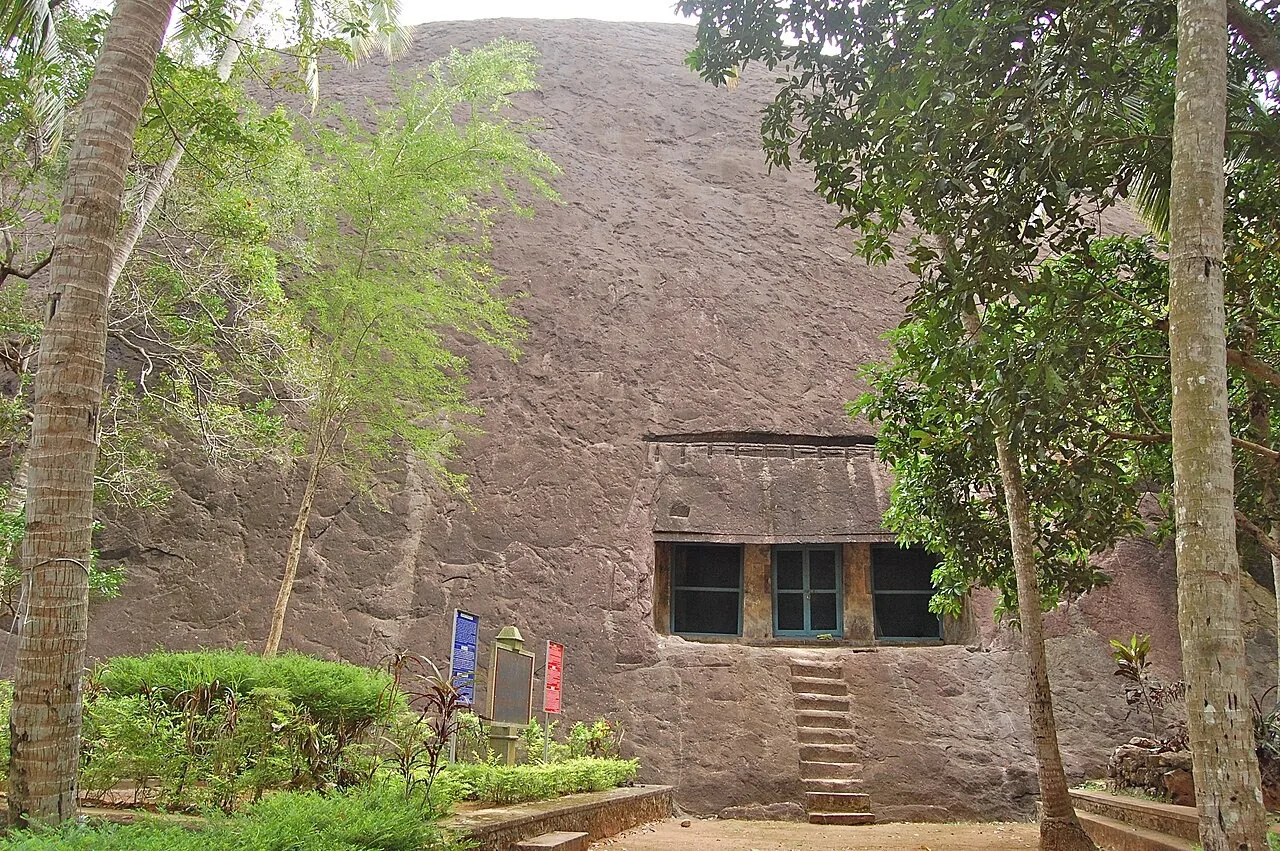
- A rock-cut cell and entrance hall
- Surviving mural fragments
- Inscriptions and the distinction between cave monument and neighbouring worship temple
How to reach
By bus
Confirm a service to Thirunandikkara and specify the rock-cut cave temple, rather than only the neighbouring worship temple. No current official route number was verified. Confirm the destination and return service at the bus stand.
By train
Nagercoil Junction (NCJ) is a regional railway gateway; arrange a separate road transfer. Check your train's stopping station and travel-date timetable.
By road
Use the exact Thirunandikkara / Thirunanthikarai cave-temple identity when arranging the final road transfer. ASI lists the cave monument in this locality; the bus stop and public entrance still need local confirmation.
Transport sources checked: . Archaeological Survey of India: Centrally Protected Monuments list.
Monument identity verified in ASI list; geographic bus approach, local stop, station proximity and return service not verified.
Visitor information
- Opening and admission
- Visitor information should be confirmed before travelling.
- Which site to request
- Ask specifically for the protected rock-cut cave. The village's living temple and the cave should not be treated as the same destination.
Best time to visit
Visit in daylight during confirmed monument access, allowing time for the interior light to reveal details without extra lighting.
Confirm admission to the cave separately from worship at the neighbouring temple. View mural fragments and inscriptions from permitted positions. Low light does not imply flash photography is allowed; follow conservation notices and staff instructions.
Visitor information should be confirmed before travelling. Fees, permissions, facilities and last entry are not established unless explicitly sourced below.
Facilities, parking and accessibility
Confirm toilets, drinking water, parking, step-free access and assistance with the destination. A railway or bus arrival does not establish access to the entrance; plan any final walk or transfer for your group.
What to see and do
- Confirm the cave-monument entrance
- Observe the rock-cut plan, murals and inscriptions from permitted positions
- Add the neighbouring temple only as a separate worship visit
Important things to know before visiting
Do not touch, rub or wet painted or inscribed surfaces. Follow all restrictions on flash, lighting and photography.
Best way to experience this place
For art enthusiasts, begin with the cave's shape, then look at the fragile painted surfaces from the permitted position.
History and story behind the place
Distinguish the places
The cave monument and the living temple associated with the Sivalaya Ottam circuit should be identified separately. A shared village name does not establish that the same building serves every historical and ritual role.
Before visiting, check which site is intended and the current approach. This is especially useful when a map search returns several spellings of Thirunandikkara.
Why fragments of painting matter
Thirunandikkara holds an important place in the study of mural painting in the southern region. Surviving plaster and painted fragments belong to a larger decorative world, portions of which are also known through older copies and descriptions. A small area of line or colour can preserve evidence of an artistic tradition even where a full scene has disappeared. Look for the relation between a painted surface and the architectural space it once animated.
Painting is also a different kind of heritage from the rock around it. Plaster and pigments can be lost while the carved chamber remains recognisable. Understanding the cave therefore requires attention to both the architecture and the fragile surfaces it once carried. A published copy, a written description and the present wall answer different questions: what an earlier observer could see, how they interpreted it, and what survives for study now.
The copies that became part of the evidence
A historical account by Vysakh A. S., published in the Kerala government's Kerala Calling magazine, describes mural copies made in 1933 and copying visits by the artist Sarkis Katchadourian in November 1940. These records matter because the paintings have not remained unchanged. Documentation made before further loss can retain information about figures, outlines and colour that a visitor may no longer distinguish on the wall.
The article also discusses an inscription of Rajaraja I recording a gift of Muttam village. This provides a more concrete historical anchor than broad claims that the cave is simply 'very ancient'. An inscription records a particular action and the language of its time; a mural records another kind of cultural activity. Reading them together can reveal several periods of use. The documentation account is secondary historical interpretation, while the inscription itself remains the primary evidence for the recorded gift.
A cave, a living shrine and a regional art journey
Thirunandikkara's place name also occurs in accounts of the Sivalaya Ottam circuit. That should not lead a visitor to merge the protected cave automatically with the living temple named in the pilgrimage route. Places can contain more than one religious site, and similar spellings can conceal important differences. The pilgrimage guide treats the route separately, allowing the cave's art history to be explained on its own evidence.
For a wider view of the district's religious art, pair the cave's story with the Jain reliefs at Chitharal and the painting and carved spaces of Thiruvattar. The three sites offer different relationships between rock, structure, image and worship. They also make a compelling argument for a slower western-district visit: the journey is not simply between scenic viewpoints, but between distinct ways that communities have created and sustained sacred places.
Rock, plaster, pigment and a written record
The cave preserves several kinds of work on the same surface. Excavation makes the architectural space; plaster prepares a surface for painting; pigment supplies line and colour; an inscription creates a written record. These layers do not necessarily have the same date or survive equally well. A largely intact rock chamber can therefore contain only fragmentary evidence of its painted interior.
That difference explains the value of the twentieth-century mural copies. They record what an observer could see at a particular time, while the current wall records what has survived since. A copy can aid interpretation, but it is a separate object with its own maker and date. For a student visit, compare those categories first: carved form, surviving painted surface, historical copy and inscription. This gives the cave a more precise history than treating every feature as proof of one unnamed ancient period.
See without adding damage
Respect barriers and restrictions on lighting, touch and photography. A faint painted surface is not improved by rubbing, wetting or placing an object against it.
Read Chitharal’s guide for a separate rock-cut setting, and the pilgrimage story for the surrounding circuit. Each places the village in a different kind of history.
Architecture and cultural heritage
A shrine carved into the rock
At Thirunandikkara the cave itself is the architectural starting point. A rock-cut sanctuary is made by removing material from a rock face, rather than assembling every wall and roof from separate blocks. Columns, the front hall and the inner space are therefore experienced in relation to the hill. Notice the transition from daylight outside to the enclosed interior: the rock determines the scale, the light and the way the building meets its surroundings.
The National Monuments Authority lists the rock-cut cave temple and adjoining land as a centrally protected monument. The hill and the carved chamber should be read together. Stand back to understand where the excavation meets the natural rock, then look at the division between the front space and the inner shrine. The building's compact scale makes those relationships particularly clear: the cave is simultaneously a carved interior and part of a larger rocky landscape.
What makes this place unique?
The site shows how rock architecture and delicate painted surfaces survive differently; fragments can carry important evidence even when a full mural is lost.
Combine this with nearby places
Pair the cave with Thirparappu in the surrounding area. Thiruvattar offers a useful comparison in structural temple architecture on a longer inland outing.
Responsible visiting
Never wet, rub or trace inscriptions and paintings. Avoid flash and follow conservation notices.
Quick summary
Thirunandikkara suits a focused heritage stop. Allow 45–90 minutes as an editorial suggestion, after confirming that the cave itself is accessible.
Sources for visitor information and transport
- National Monuments Authority: centrally protected monuments — Protected monument identities at Thirunandikkara and Parthivapuram; does not establish opening arrangements.
- Archaeological Survey of India: Centrally Protected Monuments list — Identifies the protected rock-cut cave temple at Thirunanthikarai, Kanyakumari; does not establish bus routes.
- Southern Railway: Thiruvananthapuram division station list — Station identities/codes NCJ, ERL and KZT only; not a current train timetable, last-mile distance survey or proof of nearest station.
Verification note
Editorial review: . Transport guidance follows the dated source record above; this is not a live timetable confirmation. Current opening hours, fees and permissions have not been independently verified.
Historical references support the research passages they accompany. Editorial visit durations and recommendations are suggestions, not official operating information.