
At a glance
- Location
- Thiruvattar, western Kanyakumari district
- Recommended time
- 1–2 hours plus worship queues
- Best for
- Pilgrims, temple architecture and religious art.
- Best time
- Choose a confirmed morning session for an unhurried visit, followed by the nearby valley landscape if weather permits.
- Entry
- Confirm the temple's current worship sessions, admission rules and any special service booking. Visitor information should be confirmed before travelling.
- Walking
- Plan for steps, thresholds and footwear-free walking; confirm mobility assistance with the temple.
Before you go: Follow the current dress and photography rules.
Visit durations are editorial planning suggestions. Allow extra time for travel, queues and your group’s pace.
Why visit Thiruvattar Adikesava Perumal Temple?
- The reclining Vishnu shrine, one of the Divya Desams
- The three-doorway viewing tradition
- Stone mandapams, timber details and the river setting
How to reach
By bus
For Thiruvattar, the district lists 89, 89A, 89B, 89D and 89G from Marthandam via Unnamalaikadai and Attoor. It also lists 457 and 458 from Kaliyakkavilai via Marthandam and Attoor. Confirm the temple-side stop and the short final approach locally. These are official published route listings, not live service confirmations. Confirm the destination board, boarding point, final stop and return service before travel.
By train
Nagercoil Junction (NCJ) is a regional railway gateway; arrange a separate road transfer. Check your train's stopping station and travel-date timetable.
By road
Arrange a road arrival in Thiruvattar and confirm the entrance to Adikesava Perumal Temple. A through bus serving Thiruvattar should not be described as stopping at the temple gate.
Official route listings checked: . Kanniyakumari District Administration: Adikesavaperumal Temple.
No current gate-side stop, walking distance, timetable, frequency or fare verified. Nagercoil routes exist in the official table, but its broad grouping is omitted to keep the advice clear.
Visitor information
- Timings and entry
- The district destination page leaves its timings field blank. Visitor information should be confirmed before travelling.
- Dress and photography
- Check the temple's current dress code, inner-area access and camera restrictions directly; carry suitable clothing and follow staff instructions.
Best time to visit
Choose a confirmed morning session for an unhurried visit, followed by the nearby valley landscape if weather permits.
Arrange the visit around current worship sessions. Access to worship areas and photography remain subject to temple rules. Allow time for the reclining-Vishnu shrine, permitted mandapams and timber details rather than rushing through a wider temple circuit.
Visitor information should be confirmed before travelling. Fees, permissions, facilities and last entry are not established unless explicitly sourced below.
Facilities, parking and accessibility
Confirm toilets, drinking water, parking, step-free access and assistance with the destination. A railway or bus arrival does not establish access to the entrance; plan any final walk or transfer for your group.
Earlier visitor notes
Background notes: current arrangements require confirmation. Use the dated official source record for the scope of verified details.
Plan an inland visit
A visit can fit into an inland route, but allow time for worship and the final approach. Reconfirm entry rules and any afternoon closure directly rather than relying on a timetable copied across travel sites.
Padmanabhapuram Palace and Mathur Aqueduct introduce other kinds of building in the district. Group stops according to the available day rather than attempting every inland landmark.
What to see and do
- Begin with worship during a confirmed session
- Observe the permitted mandapams and roof details
- Pair the visit with Mathur if there is sufficient road and walking time
Important things to know before visiting
Follow the current dress and photography rules. Do not touch painted surfaces or assume all halls and shrines are open to sightseeing.
Best way to experience this place
For pilgrims, arrange worship first and leave architectural observation for the permitted spaces around it.
History and story behind the place
Adikesava and the reclining form of Vishnu
At Thiruvattar, Vishnu is worshipped as Adikesava Perumal, reclining upon the serpent Adisesha. The district identifies the temple as one of the 108 Divya Desams, the sacred places celebrated within the Tamil Vaishnava tradition. That connects this western Kanyakumari shrine with a much wider pilgrimage and poetic geography. Its importance is not limited to the scale of the image or the size of the complex: the relationship between deity, hymn and place is central to its religious identity.
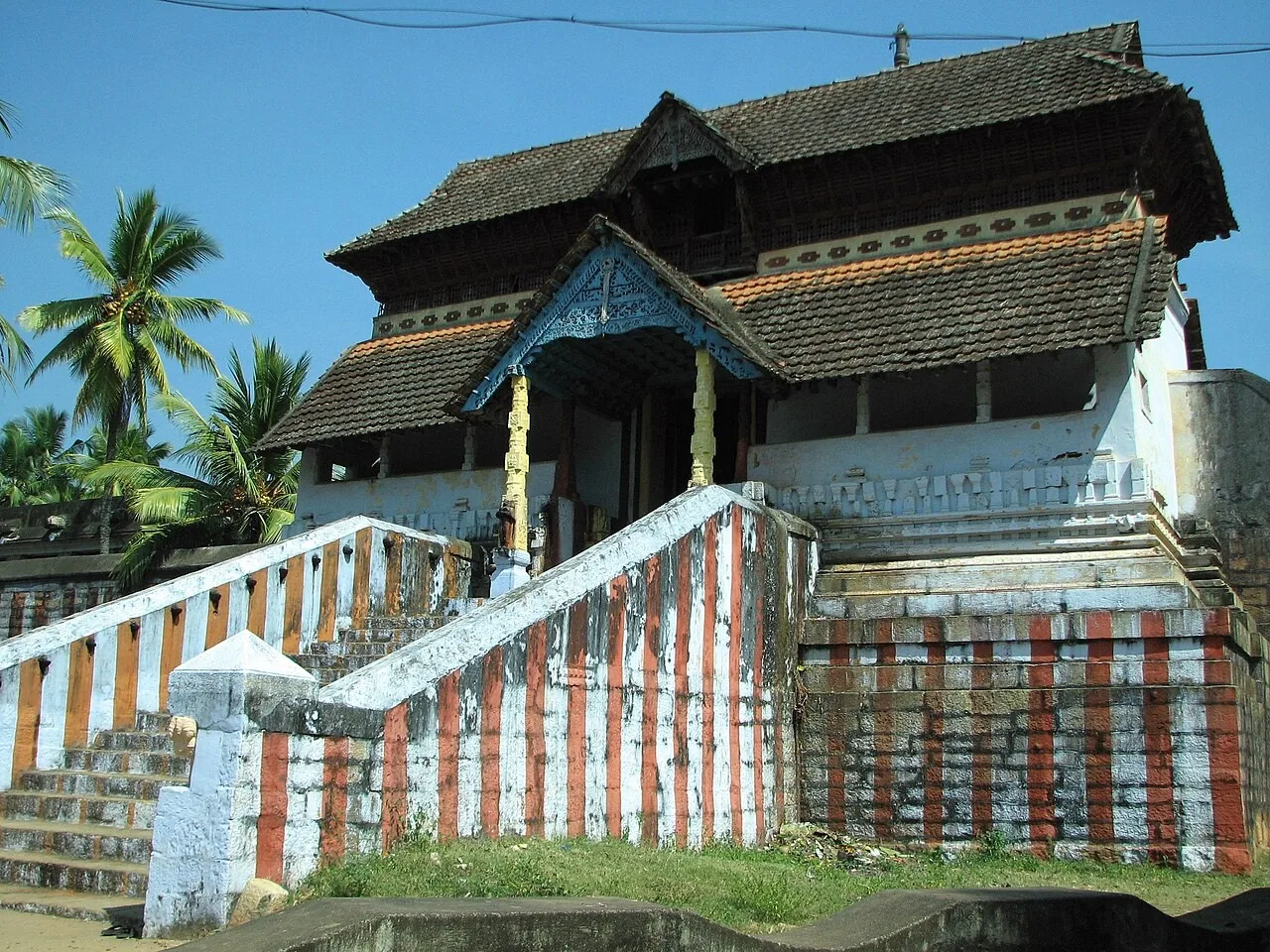
The reclining image is viewed through three doorways, so the encounter unfolds across the shrine rather than through one uninterrupted opening. In front of the sanctum is the Ottakkal Mandapam, the single-stone hall highlighted in descriptions of the complex. Form and viewing position work together: the architecture directs attention towards different parts of the reclining deity, giving the act of looking a sequence of its own.
Stone, timber and painted surfaces
The temple combines stone construction, timber work, covered circulation and painting. Each material gives the spaces a different character. Stone carries carved figures and structural weight; timber supports roofs and decorative detail; painted surfaces add another visual register. Move slowly enough to notice the shifts from open light to the subdued interior of a covered space. Architecture and worship are experienced together through this changing sequence of texture, scale and illumination.
The district's own visitor description specifically notes the wall paintings. They deserve a place in the visit alongside the more easily described pillars and sanctum. A painted fragment or darkened surface can be difficult to read, particularly where access and lighting are limited. Thirunandikkara offers a useful companion story about how murals are recorded and preserved. Together the two sites show why the art history of the district includes vulnerable surfaces as well as durable stone sculpture.
Why the reclining image is seen through three doorways
Adikesava’s reclining form is experienced through separate doorways rather than as one frontal standing figure. The head, middle and feet become successive parts of a devotional view. That arrangement gives the sanctum a different spatial character from a shrine approached along one central axis. The serpent Adisesha, the reclining posture and the name Adikesava together identify the Vishnu tradition of this temple.
The Ottakkal Mandapam, covered circulation, timber details and murals each reward a different pace of looking. A hall’s stone surface, the supporting roof above a passage and a painted wall are different parts of the building, with different conservation needs. The temple’s comparison with Thiruvananthapuram’s Padmanabhaswamy shrine is useful as a regional religious connection; it should not be used to assign one construction date or a simple prototype relationship to both complexes.
Geography, water and local life
A temple in its own landscape
The district’s temple account places Thiruvattar among its important sacred places and notes the wall paintings in the complex. Start with the place itself: its approaches, enclosure and the relationship between covered and open spaces.
Names may appear as Adikesava, Adikesavaperumal or Athikesava in English. Check the full place name when planning a route; a similar deity name elsewhere is not the same destination.
Rivers imagined as garlands around the shrine
Thiruvattar's local religious story brings water into the account of Vishnu's victory over Kesan and Kesi. In the version published by the district, rivers arrive in flood to disturb the reclining lord, but the ground rises and the waters flow around him as garlands. The story gives the surrounding river landscape a devotional form. It should be read as a sacred explanation of place, alongside a separate account of the real rivers and their drainage basin.
The western district's rivers connect hill catchments, cultivated land and coastal outlets. That larger setting makes a visit to Thiruvattar more rewarding than a temple-only stop. The water landscape encountered on the way to Mathur or Thirparappu belongs to the same broader regional journey. Religious narratives, irrigation history and the present-day use of riverbanks offer different ways to understand it; each adds context without replacing the others.
Legends and local traditions
Religious and local accounts in this section are traditions, distinct from dated historical records.
A Vaishnava shrine within a wider sacred region
The local narratives around Adikesava connect the shrine with twelve Shiva temples. In one account, Kesi attempts to escape with twelve hands and Vishnu restrains him through twelve sacred placements, giving a mythic relationship to the surrounding shrines. Sivalaya Ottam brings devotees through a real circuit of twelve Shiva temples while invoking Vishnu's names. The interplay between the pilgrimage and the Adikesava tradition makes the western district's sacred geography particularly distinctive.
These overlapping traditions make the western district particularly interesting for visitors who want to understand lived religion. Devotion to Vishnu and Shiva can be connected in a pilgrimage story without making the temples interchangeable. Read the Sivalaya Ottam guide for the circuit, then allow Thiruvattar its own time for worship, architecture and painting. Padmanabhapuram Palace supplies a further regional connection through the history of Travancore, while remaining a very different kind of place.
What makes this place unique?
The temple places Divya Desam worship within the district's western architectural and river landscape, extending a visitor's understanding beyond the cape.
Combine this with nearby places
Mathur Aqueduct is a logical companion to Thiruvattar, linking the temple town with the surrounding valley. Thirunandikkara needs a separate road leg.
Responsible visiting
Keep sacred narratives distinct from building dates. Follow footwear, dress and photography instructions.
Quick summary
Thiruvattar is best for a considered temple visit. Allow 1–2 hours as an editorial suggestion and confirm the worship session before travelling.
Sources for visitor information and transport
- Kanniyakumari District: Adikesavaperumal Temple — Thiruvattar temple, architectural interest and Divya Desam status; its timings field is blank.
- Kanniyakumari District Administration: Adikesavaperumal Temple — Marthandam and Kaliyakkavilai route numbers and approach towns for Thiruvattar.
- Southern Railway: Thiruvananthapuram division station list — Station identities/codes NCJ, ERL and KZT only; not a current train timetable, last-mile distance survey or proof of nearest station.
Verification note
Editorial review: . Transport guidance follows the dated source record above; this is not a live timetable confirmation. Current opening hours, fees and permissions have not been independently verified.
Historical references support the research passages they accompany. Editorial visit durations and recommendations are suggestions, not official operating information.