At a glance
- Location
- Pechiparai, Western Ghats reservoir region
- Recommended time
- 1–2 hours at an authorised viewpoint, plus the inland journey
- Best for
- Water landscapes, engineering history and nature-oriented road outings.
- Best time
- Choose settled weather and check local rainfall and reservoir-related restrictions. A fuller reservoir is not a guarantee of public access.
- Entry
- Confirm permitted viewing areas, checkpost requirements and any separate forest access. Visitor information should be confirmed before travelling.
- Walking
- Use only authorised visitor paths. Dam structures, steep banks and surrounding forest are not automatically open to walking.
Before you go: Do not approach spillways, enter the water or cross safety barriers.
Visit durations are editorial planning suggestions. Allow extra time for travel, queues and your group’s pace.
Why visit Pechiparai Dam?
- A historic Travancore-period reservoir project
- The forested catchment and changing water landscape
- The connection between stored water, canals and farming
How to reach
By bus
The district lists 313 from Nagercoil Vadasery via Thuckalay and Kulasekharam for Pechiparai. It also lists 457 from Kaliyakkavilai via Marthandam, Thiruvattar and Kulasekharam. Confirm the Pechiparai stop and the permitted visitor viewpoint; the bus destination does not grant access onto dam or forest land. These are official published route listings, not live service confirmations. Confirm the destination board, boarding point, final stop and return service before travel.
By train
Nagercoil Junction (NCJ) is a regional railway gateway; arrange a separate road transfer. Check your train's stopping station and travel-date timetable.
By road
Pechiparai is an inland road journey, about 60 km from Kanniyakumari in the district tourism account. Confirm the authorised viewing area and final transfer before departure.
Official route listings checked: . Kanniyakumari District Administration: Pechiparai Dam; Padmanabhapuram Municipality: Train Schedule and Buses.
Official table lists several additional variants but does not disaggregate every via town by route; only clear examples are used. No frequency, fare, departure time, final walking distance or public dam access verified.
Visitor information
- Visitor access and hours
- The district tourism page's timings field is blank. Confirm the open viewing areas and any permission or checkpost requirement. Visitor information should be confirmed before travelling.
- Activities and facilities
- No current boating operation, swimming area, toilet provision or accessible visitor circuit is established here. Check before building an outing around an activity.
Best time to visit
Choose settled weather and check local rainfall and reservoir-related restrictions. A fuller reservoir is not a guarantee of public access.
Confirm public viewing before setting out. Water levels and release operations affect access. Do not assume dam-top walking, boating or bathing is available; use only admitted viewpoints and follow notices at working infrastructure.
Visitor information should be confirmed before travelling. Fees, permissions, facilities and last entry are not established unless explicitly sourced below.
Facilities, parking and accessibility
Confirm toilets, drinking water, parking, step-free access and assistance with the destination. A railway or bus arrival does not establish access to the entrance; plan any final walk or transfer for your group.
Earlier visitor notes
Background notes: current arrangements require confirmation. Use the dated official source record for the scope of verified details.
Make it a deliberate inland stop
Confirm visitor access with the relevant local authority before setting out. Keep sufficient travel time from the cape or Nagercoil, and decide whether the reservoir or Thirparappu Falls is the main purpose of the day.
The guide does not assume boating, bathing or unrestricted dam-top access. Use public approaches and follow notices at working infrastructure. A quieter visit with fewer stops gives more room for the landscape, a meal and the return journey.
What to see and do
- Confirm admission and the return journey first
- View the reservoir and slopes from permitted ground
- Connect the visit with one inland water-landscape stop if conditions allow
Important things to know before visiting
Do not approach spillways, enter the water or cross safety barriers. Water releases and official restrictions can change the visitor route.
Best way to experience this place
For families, choose a confirmed safe viewing point and make the reservoir the principal inland stop rather than adding an unverified forest excursion.
Geography, water and local life
A reservoir built across several years
The district dates the planning and construction of Pechiparai Dam to 1897–1906. Its setting among the Western Ghats makes it both a recognisable landscape and a major chapter in local water management. The project belongs to the period before the district’s 1956 incorporation into Tamil Nadu.
For the larger sequence, read the irrigation-network story. It places Pechiparai alongside Perunchani and the later Chittar works, showing how storage and distribution developed through separate projects rather than in one building campaign.
Storage and irrigation are connected
A district release notice dated 1 June 2026 records water being released from Pechiparai for irrigation. That dated example shows the reservoir’s working role. It does not establish the release schedule, water level or visitor arrangements for another day.
A reservoir stores water; channels and diversion structures determine where released water travels. Mathur Aqueduct explains one distribution crossing, while the farming story follows the cultivated landscape that depends on water being available at useful times.
Read the water and the hills together
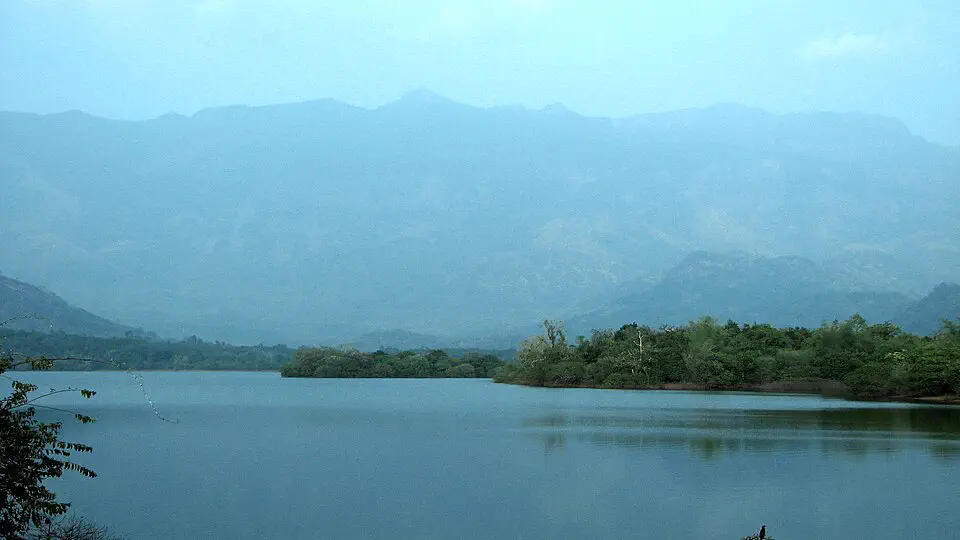
From any authorised public viewpoint, look at the relation between the open reservoir and the surrounding slopes. A waterbody can look different as storage changes, while weather alters the visibility of the hills. Allow the actual conditions to shape the visit.
The neighbouring forest landscape has its own access arrangements. A road to a reservoir is not permission to enter forest tracks or approach restricted infrastructure. The forest overview helps distinguish a general landscape visit from a separately authorised forest outing.
What makes this place unique?
Pechiparai makes the relationship between the Western Ghats catchment and the district's irrigated landscape visible at a large scale.
Combine this with nearby places
Pair with Thirparappu on an inland road outing if both places are open. Leave time for separate access checks and do not treat the dam as a through-route into forest.
Responsible visiting
Keep clear of gates, release channels and restricted works. Reservoir access does not authorise forest entry.
Quick summary
Pechiparai suits visitors interested in water and hill landscapes. Allow 1–2 hours as an editorial suggestion only after public access is confirmed.
Sources for visitor information and transport
- Kanniyakumari District: Pechiparai Dam — Reservoir destination, hill setting and 1897–1906 construction period; published timings field is blank and suspect dimensions are not used.
- Kanniyakumari District Administration: Pechiparai Dam — 313 from Vadasery via Thuckalay/Kulasekharam; 457 from Kaliyakkavilai via Marthandam/Thiruvattar/Kulasekharam.
- Padmanabhapuram Municipality: Train Schedule and Buses — Official published route endpoints through Thuckalay; no route-table revision date or live service confirmation. Full page retrieved by HTTP on 2026-10-31.
- Southern Railway: Thiruvananthapuram division station list — Station identities/codes NCJ, ERL and KZT only; not a current train timetable, last-mile distance survey or proof of nearest station.
Verification note
Editorial review: . Transport guidance follows the dated source record above; this is not a live timetable confirmation. Current opening hours, fees and permissions have not been independently verified.
Historical references support the research passages they accompany. Editorial visit durations and recommendations are suggestions, not official operating information.