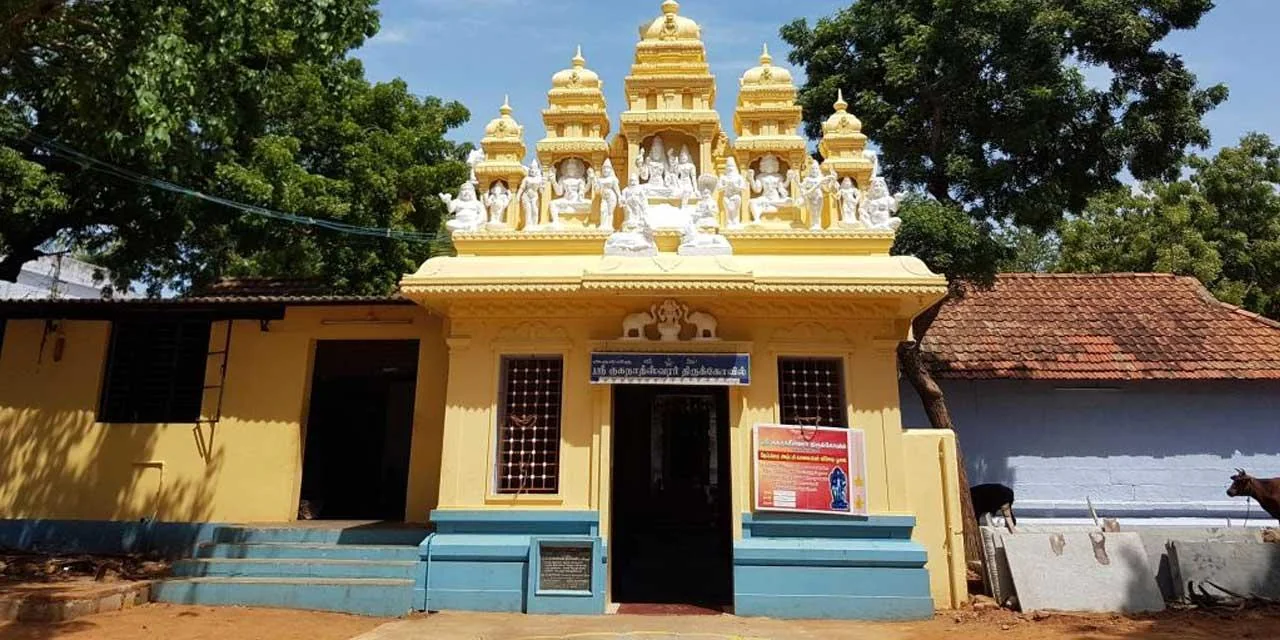
At a glance
- Location
- Kanyakumari town; confirm the shrine locality before travel
- Recommended time
- 30–60 minutes during a confirmed worship session
- Best for
- Pilgrims, temple architecture and visitors interested in inscriptions.
- Best time
- A confirmed morning session can fit before a later seafront outing. Do not assume the temple remains open through the afternoon.
- Entry
- Confirm the current worship session, admission rules and permitted viewing areas. Visitor information should be confirmed before travelling.
- Walking
- Plan for footwear-free walking and thresholds; ask staff about mobility assistance and time needed for your group.
Before you go: Do not rub, trace or touch inscriptions.
Visit durations are editorial planning suggestions. Allow extra time for travel, queues and your group’s pace.
Why visit Guganathaswamy Temple?
- A temple visit beyond the main cape shrine
- The Chola-period architectural context
- Inscriptions as evidence to read without touching
How to reach
By bus
The district Guganatha Swamy page lists 1, 2 and 303 from Nagercoil via Suchindram and Kottaram, and 303 from Marthandam or Kaliyakkavilai via Thuckalay and Nagercoil. These reach the Kanniyakumari approach; confirm the actual temple alighting point.
By train
Kanniyakumari railway station (CAPE) is the relevant town arrival point: the district identifies this temple as near the railway station. A measured station-to-entrance walk was not verified.
By road
Use the full Guganatha Swamy Temple name and check the entrance on arrival. The shrine is near Kanniyakumari railway station; do not assume a bus terminates at its door.
Official route listings checked: . District administration: Guganatha Swamy Temple.
Checked the official web listing on 31 October 2026. This confirms what the authority publishes, not live operation. No departure times, frequency, fare or guaranteed return service verified. Confirm the destination, alighting stop and return service with bus staff.
Visitor information
- Published temple sessions
- The district destination page lists 06:00–11:15 and 17:00–20:45. Last verified: 31 October 2026. Confirm with the temple for the travel day.
- Entry and photographs
- Confirm inner-area access, dress and permission to photograph inscriptions. Visitor information should be confirmed before travelling.
Best time to visit
A confirmed morning session can fit before a later seafront outing. Do not assume the temple remains open through the afternoon.
Establish current worship hours, entry and photography arrangements before travelling. View the building and inscriptions from permitted areas without touching or rubbing carved surfaces.
Visitor information should be confirmed before travelling. Fees, permissions, facilities and last entry are not established unless explicitly sourced below.
Facilities, parking and accessibility
Confirm toilets, drinking water, parking, step-free access and assistance with the destination. A railway or bus arrival does not establish access to the entrance; plan any final walk or transfer for your group.
Earlier visitor notes
Background notes: current arrangements require confirmation. Use the dated official source record for the scope of verified details.
Visit around worship
Check current opening and worship arrangements through the district listing or the temple before making a special journey. Plan the approach using the full shrine name and locality, especially when using a different English spelling.
Follow guidance on dress, footwear and photography. Read inscriptions from the permitted viewing position and avoid touching or rubbing carved surfaces. For a broader day, pair the temple with a considered mainland cape route in the itinerary guide.
What to see and do
- Confirm the shrine identity and admitted worship session
- Observe the building and permitted inscription views
- Combine with one mainland cape stop only after confirming the actual locality
Important things to know before visiting
Do not rub, trace or touch inscriptions. Follow the current dress and photography rules and keep worship routes clear.
Best way to experience this place
For history enthusiasts, begin with the temple's overall form, then ask which inscriptions can be viewed from permitted public areas.
History and story behind the place
What the Chola association means
The district administration associates the temple with Rajaraja Chola and identifies its architectural character as Chola. Its broader temple account records sixteen inscriptions, including dates in 1038, 1044 and 1045. These written records are a specific reason to consider the shrine within the district’s medieval history.
A date on an inscription and the construction date of a whole building answer different questions. Look for an authorised explanation of what an inscription records before connecting it with a particular doorway, wall or image. The history overview explains why buildings can preserve several periods of use.
A different architectural encounter
Start with the arrangement of the stone shrine and its approach, then look at individual surfaces and carved details from permitted areas. A patient visit can reveal differences between a building’s overall form and the small records preserved on it.
Compare this experience with Kumari Amman Temple and the modern monuments visible from Triveni Sangamam. Their proximity brings different histories into one town; it does not give them a shared construction period or identical religious traditions.
Geography, water and local life
A cape temple beyond the shore
Guganathaswamy Temple is in Kanyakumari town, near its railway station. The district’s dedicated listing and directions identify the shrine at the cape, so it should not be confused with Nagaraja Temple in Nagercoil. Guganatheeswarar and Guhanatheeswarar are other spellings used for this temple.
This makes a useful addition to a mainland visit for travellers interested in architecture. Give it its own time for worship and observation rather than treating proximity to a station as a promise that it will fit between any two train connections.
What makes this place unique?
The temple gives visitors a Chola-related architectural and epigraphic strand of cape history, distinct from the offshore monuments.
Combine this with nearby places
Combine with Kumari Amman Temple and one mainland memorial on a Kanyakumari town route. Its station-side location still requires a separate approach.
Responsible visiting
Do not rub or trace inscriptions. Keep uncertain location and date claims out of travel instructions.
Quick summary
Guganathaswamy suits a short worship-and-heritage visit. Allow 30–60 minutes as an editorial suggestion and confirm the correct locality and opening session.
Sources for visitor information and transport
- Kanniyakumari District: Guganatha Swamy Temple — Temple near Kanniyakumari station, Chola association, inscriptions and published worship sessions.
- District administration: Guganatha Swamy Temple — Destination bus listings and location near Kanniyakumari railway station.
- Southern Railway: Trivandrum Division station list (1 April 2022) — Station identities and codes only: Nagercoil Junction (NCJ), Nagercoil Town (NJT), Kanniyakumari (CAPE); not a current timetable or proof of the nearest station to each attraction.
Verification note
Editorial review: . Transport guidance follows the dated source record above; this is not a live timetable confirmation. Last verified for the explicitly sourced visitor details: 31 October 2026.
Historical references support the research passages they accompany. Editorial visit durations and recommendations are suggestions, not official operating information.