
At a glance
- Location
- Colachel, Arabian Sea coast
- Recommended time
- 1½–2 hours for an unhurried town and coast visit
- Best for
- Coastal history, local life and a short western-shore outing.
- Best time
- Visit in daylight when you can see where public access ends. Avoid rough-sea conditions and allow time to move away from the exposed shore.
- Entry
- Public town areas, the memorial and the working harbour have different access arrangements. Visitor information should be confirmed before travelling.
- Walking
- Choose short walks on public streets and established shore viewpoints; harbour surfaces and working areas may be unsuitable for visitors.
Before you go: Keep clear of fish landings, boats and equipment.
Visit durations are editorial planning suggestions. Allow extra time for travel, queues and your group’s pace.
Why visit Colachel?
- A working coastal town
- The 1741 Battle of Colachel and Travancore history
- The connection between De Lannoy’s later service and Udayagiri
How to reach
By bus
Padmanabhapuram Municipality's route list identifies 5A and 92B between Thuckalay and Colachel. Treat this undated list as a starting point for enquiries; confirm the current route number and Colachel arrival stop before boarding. Arrange any further transfer to the public shore or memorial viewpoint.
By train
Nagercoil Junction (NCJ) is a regional railway gateway; arrange a separate road transfer. Check your train's stopping station and travel-date timetable.
By road
Thuckalay is an officially listed bus-route approach to Colachel. Confirm public access to the particular memorial or coastal viewpoint; harbour areas may have different access arrangements.
Official route listings checked: . Padmanabhapuram Municipality: Train Schedule and Buses.
Official municipal route listing retrieved, but its revision date and current operation are unconfirmed. No frequency, fare, return service, exact shore stop or nearest-station assessment verified.
Visitor information
- Memorial and harbour access
- Confirm the memorial's current access; harbour access is a separate matter. Visitor information should be confirmed before travelling.
- Shore safety
- No current lifeguard provision or approved bathing area has been established. Stay on shore and follow local warnings.
Best time to visit
Visit in daylight when you can see where public access ends. Avoid rough-sea conditions and allow time to move away from the exposed shore.
Keep the visit around daylight and local working activity. A harbour is not automatically an open visitor promenade; establish public access before approaching boats or landing areas. Confirm the battle memorial’s location before making it your principal stop.
Visitor information should be confirmed before travelling. Fees, permissions, facilities and last entry are not established unless explicitly sourced below.
Facilities, parking and accessibility
Confirm toilets, drinking water, parking, step-free access and assistance with the destination. A railway or bus arrival does not establish access to the entrance; plan any final walk or transfer for your group.
What to see and do
- Begin with the town’s maritime setting
- Visit a confirmed public memorial viewpoint
- Use the wider Travancore story to connect the visit with Udayagiri on another suitable stop
Important things to know before visiting
Keep clear of fish landings, boats and equipment. Do not enter the harbour or photograph workers closely without permission.
Best way to experience this place
For history enthusiasts, read about the battle before visiting the memorial, then observe the present-day coast from a public viewpoint.
History and story behind the place
Begin with the coastal town
The municipality identifies Colachel as a town on the district’s west coast with a historic port connection. The sea matters here as a route, a workplace and a setting for political encounters.
A port town is more than the site of a battle. Notice the relationship between the shore, settlement and places of work, while leaving room for local activity around landing and transport areas.
What changed in the battle of 1741
The Battle of Colachel in 1741 brought Marthanda Varma's Travancore forces into conflict with the Dutch East India Company, usually abbreviated as the VOC. The company's commercial power and armed presence were closely connected. Travancore's victory therefore belongs to the history of a regional kingdom asserting control in a landscape where European trading companies pursued political and military influence. It is more useful to explain that contest than to reduce the event to a claim that it was the world's first example of its kind.
The later career of Eustachius De Lannoy gives the conflict an unusual aftermath. The Ministry of Tourism records that he entered Marthanda Varma's forces after the defeat and connects his service with Udayagiri Fort. Military expertise changed hands rather than simply disappearing with the losing force. That continuing relationship is one reason the battle belongs within a wider account of state-building, defence and the movement of technical knowledge in Travancore.
The victory memorial and the way history is remembered
The municipal account identifies a victory memorial connected with the battle. A memorial provides a place at which an event is remembered, but it is not the event itself. Its design, inscription and setting reflect the choices of those who created and maintained the commemoration. A visitor can ask what is emphasised: the ruler, the victorious forces, the date, the place or the wider significance assigned to the conflict.
Remembering Colachel also means following what happened after the fighting. Marthanda Varma's kingdom continued to develop its military institutions, and De Lannoy's service became part of that process. A journey from the coast to Udayagiri and Padmanabhapuram therefore follows a change in political relationships as well as a change in terrain. The battlefield's significance lies partly in those longer consequences, beyond the date recorded on a commemorative monument.
A town that continues beyond the battle narrative
Allow time for Colachel's present coastal setting as well as its military history. Streets, religious institutions and fishing-related work make it a living place rather than an outdoor illustration of one eighteenth-century event. Maritime history depends on people with practical knowledge of weather, boats, landing places and exchange, not only on rulers and company commanders. The present town provides a reason to stay with that human perspective after visiting a memorial.
A western-coast day can give each neighbouring place a distinct role. At Colachel, begin with the port and memorial story; at Muttom, look at rock, surf and the lighthouse; at Mandaikadu, explore the goddess pilgrimage and its festival traditions. This approach also creates a more balanced trip plan. It recognises that the district's western area includes a substantial coast, with its own settlements and religious life, alongside the palace, river valleys and inland reservoirs.
The conflict with the Dutch
Government tourism material dates the Battle of Colachel to 1741. It connects the conflict with Marthanda Varma and the later Travancore service of De Lannoy. Some summary accounts give conflicting dates, so a precise day should not be inferred from a repeated travel paragraph.
The importance of the event can be explained without claiming it was the first defeat of every kind of European force in Asia, or that it ended all Dutch activity in India.
Follow the evidence to another place
Udayagiri Fort preserves the memorial connection to De Lannoy and his family. Vattakottai introduces a separate coastal defence setting.
Together the places show why the port, inland fort and coastal fort should have different roles in a heritage route. The same short battle narrative need not stand in for every place’s history.
Why trade and political power met at a port
The VOC was a trading company with armed power. Its dealings with Travancore were therefore not confined to buying and selling goods. Control of a port, access to inland markets and the authority of a growing regional kingdom could bring commercial interests into military conflict. Colachel’s coastal location is central to understanding why the encounter happened within a wider maritime contest.
Travancore’s victory did not end every Dutch activity in India. Its regional consequences are more concrete: Marthanda Varma’s authority, De Lannoy’s subsequent service and the military institutions associated with Udayagiri. Reading the battle through those consequences keeps the event substantial without a global ‘first-ever’ claim. The memorial belongs to the later act of remembering that conflict, while the port and town continued to have lives beyond it.
Visit a working coast
Check the public approach to a memorial or port area before travelling specifically to enter it. Harbour operations and controlled spaces take priority over sightseeing.
For a wider view of the district’s coastal communities, read the fishing-life feature. It shifts attention from military history to the work and knowledge that continue to shape the coast.
Geography, water and local life
A port town on the district's western shore
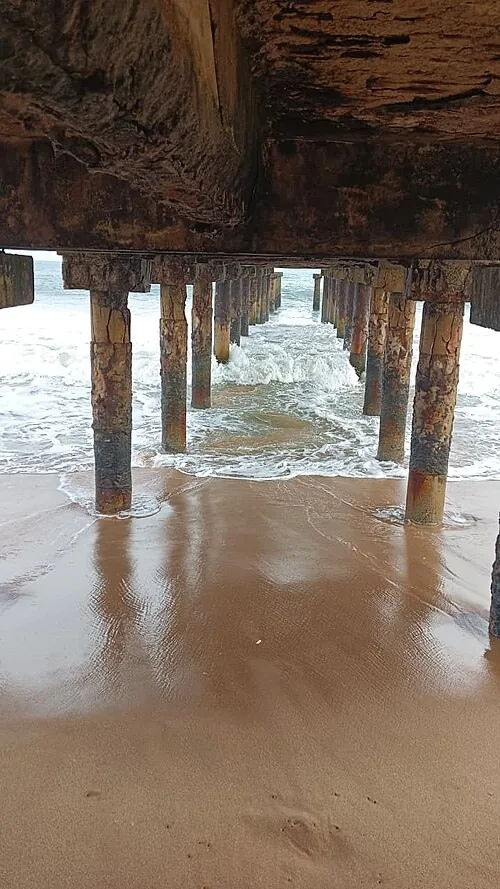
Colachel belongs to Kanyakumari's western coastal story, a part of the district that can disappear from itineraries focused entirely on the cape. The municipality identifies its historic port and its connection with Marthanda Varma's victory over the Dutch. The sea is therefore more than scenery here. It forms the setting for trade, conflict and the present-day work of a coastal town, with the inland royal region lying beyond it.
To understand a port historically, think about connections as well as vessels: landing places, routes inland, markets, supplies and the people who moved goods between them. A coast can be commercially important without resembling a large modern container harbour. Colachel's location within a wider maritime region connects its history with Muttom, Mandaikadu and the neighbouring settlements, while its link with the royal interior gives the port another direction to follow.
What makes this place unique?
Colachel brings a major event in Travancore's military history into a working coastal town, giving the story a landscape and community context.
Combine this with nearby places
Pair Colachel with Muttom on the western coast. Udayagiri provides a historical connection but needs a separate inland drive.
Responsible visiting
Leave room for fishing work and ask before photographing workers. The battle did not establish that all Dutch activity in India ended.
Quick summary
Colachel suits a short history-and-coast stop. Allow 1½–2 hours as an editorial suggestion and respect the limits of public harbour access.
Sources and further reading
Sources for visitor information and transport
- Kanniyakumari District: Colachel Beach — Coastal town destination and shore setting; not visitor access to the harbour or a lifeguard service.
- Padmanabhapuram Municipality: Train Schedule and Buses — Official published route endpoints through Thuckalay; no route-table revision date or live service confirmation. Full page retrieved by HTTP on 2026-10-31.
- Southern Railway: Thiruvananthapuram division station list — Station identities/codes NCJ, ERL and KZT only; not a current train timetable, last-mile distance survey or proof of nearest station.
Verification note
Editorial review: . Transport guidance follows the dated source record above; this is not a live timetable confirmation. Current opening hours, fees and permissions have not been independently verified.
Historical references support the research passages they accompany. Editorial visit durations and recommendations are suggestions, not official operating information.